The Future of Corporate AI
Our insights and opinions on building corporate AI that understands the context of the organizations it serves.
Start with the foundation: What Is a Corporate AI Operating Layer?
 Building Corporate AI
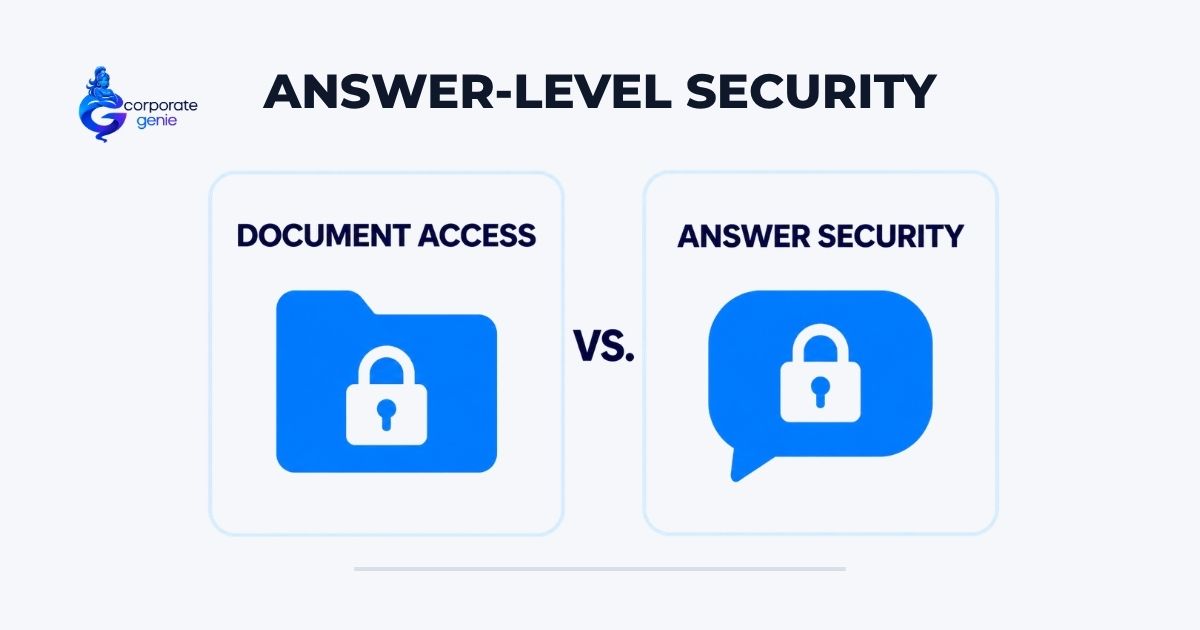
Why Folder Permissions Fail Corporate AI
Folder permissions govern what AI can read, not what it can reveal. Why corporate AI needs answer-level security, dynamic RBAC and ABAC, and governed responses.
 Building Corporate AI
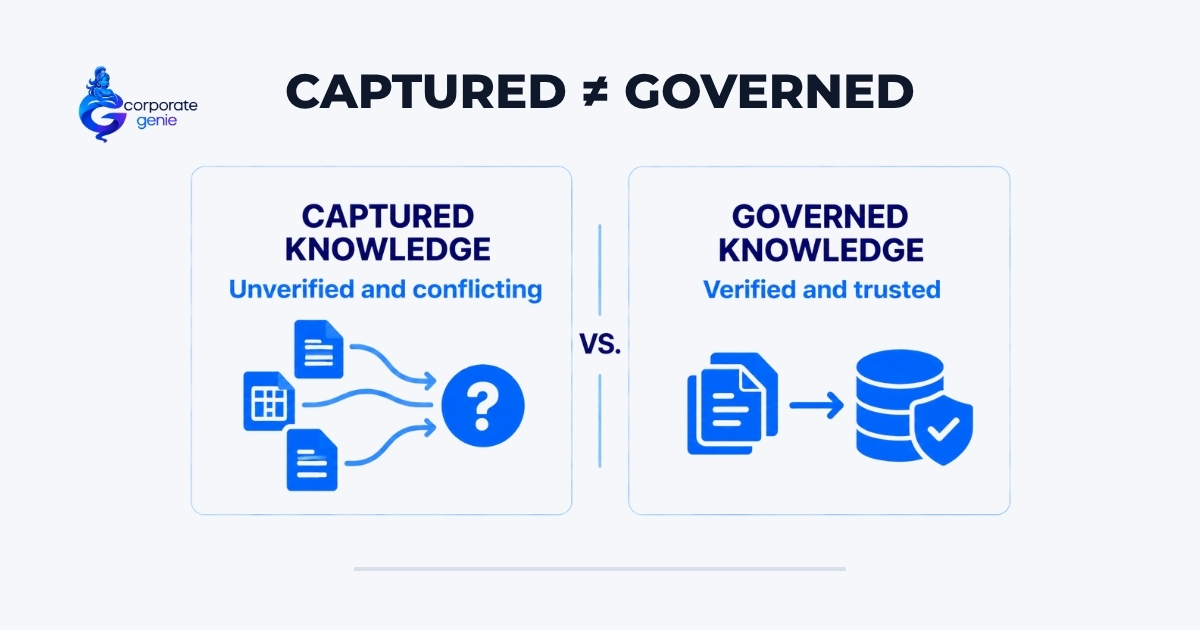
Why Captured Knowledge Is Not Governed Knowledge
Captured knowledge is recorded text. Governed knowledge is verified operational truth. Here are the four requirements that make corporate AI dependable.
 Building Corporate AI
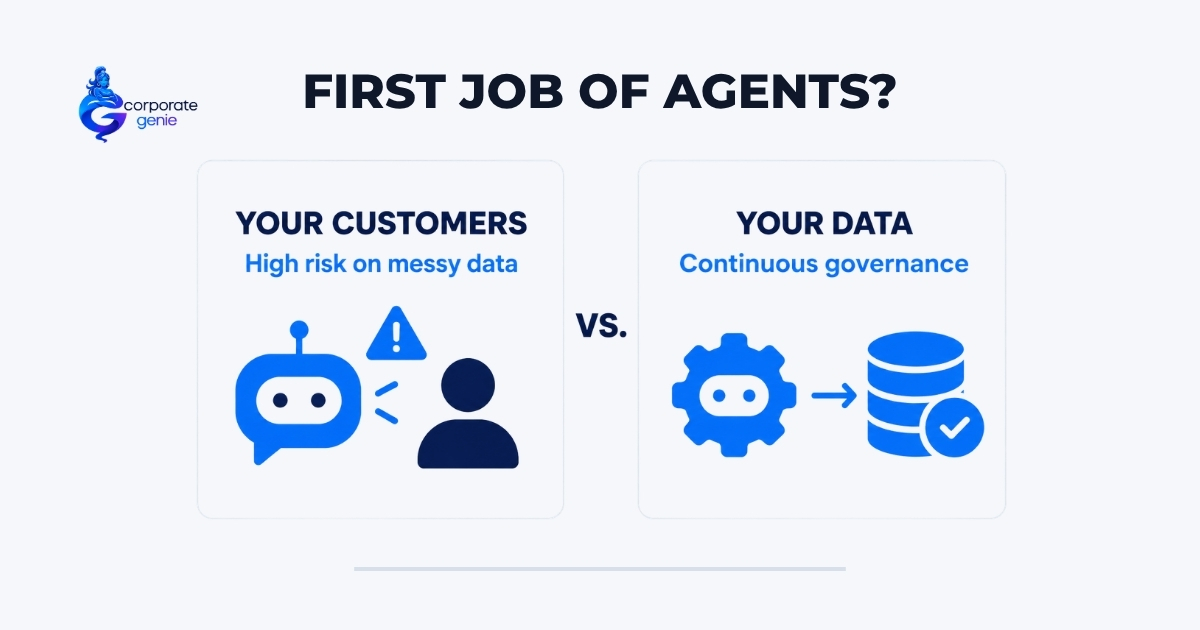
The First Best Job for Agentic AI Is Internal Data Governance and Maintenance
The market hypes agentic AI for external workflows, but deploying autonomous agents on ungoverned data is reckless. The true value of agents is internal data maintenance.
 Building Corporate AI
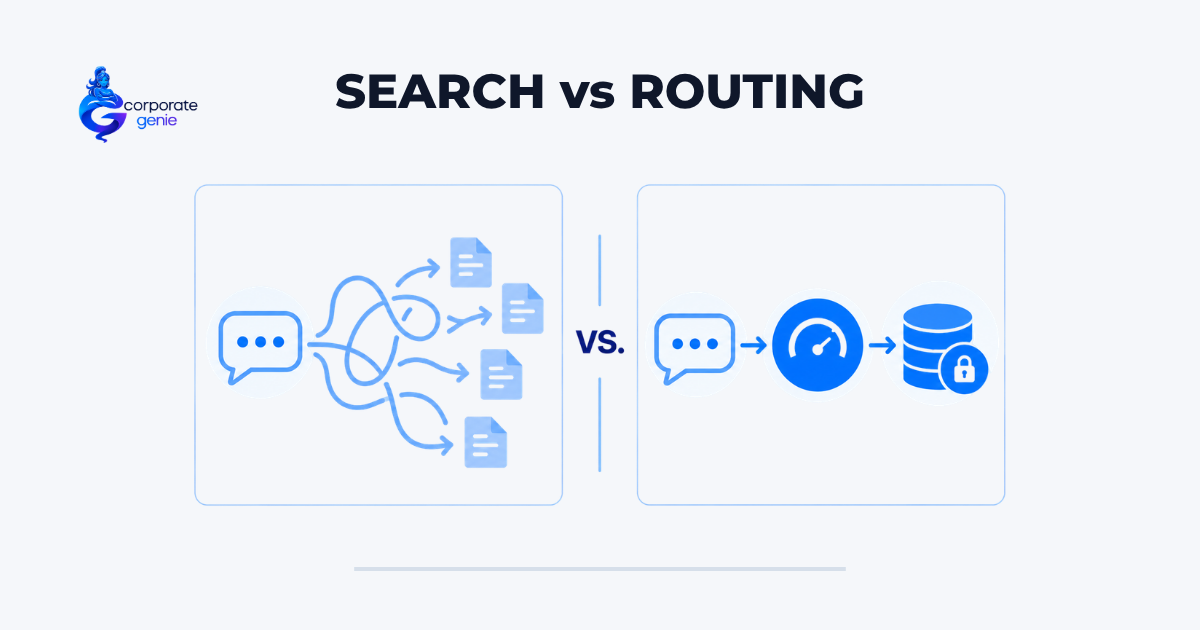
The Decision Engine: Why Active Routing Is the Future of Corporate AI
AI creates real business value when it acts as an active orchestration engine. Learn how routing queries to governed systems delivers precise, role-aware answers.
 Building Corporate AI
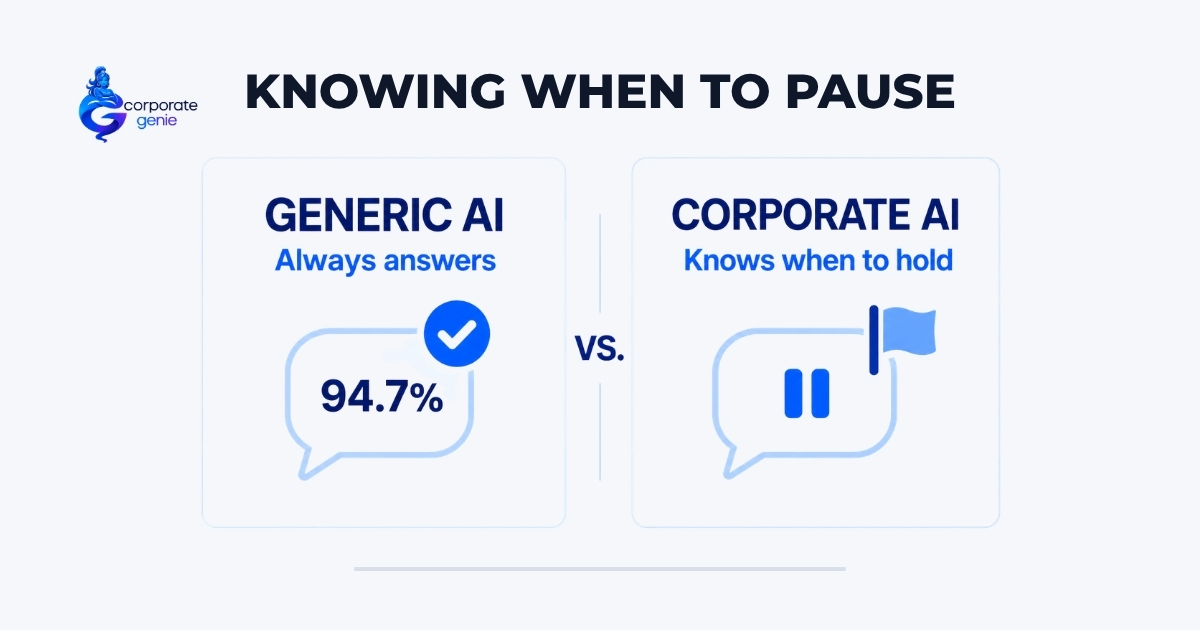
Why Corporate AI Should Sometimes Refuse to Answer
An AI system that always answers will quietly resolve conflicts the business never settled. The more valuable design surfaces the gap and routes it to the person who can close it.
 Building Corporate AI
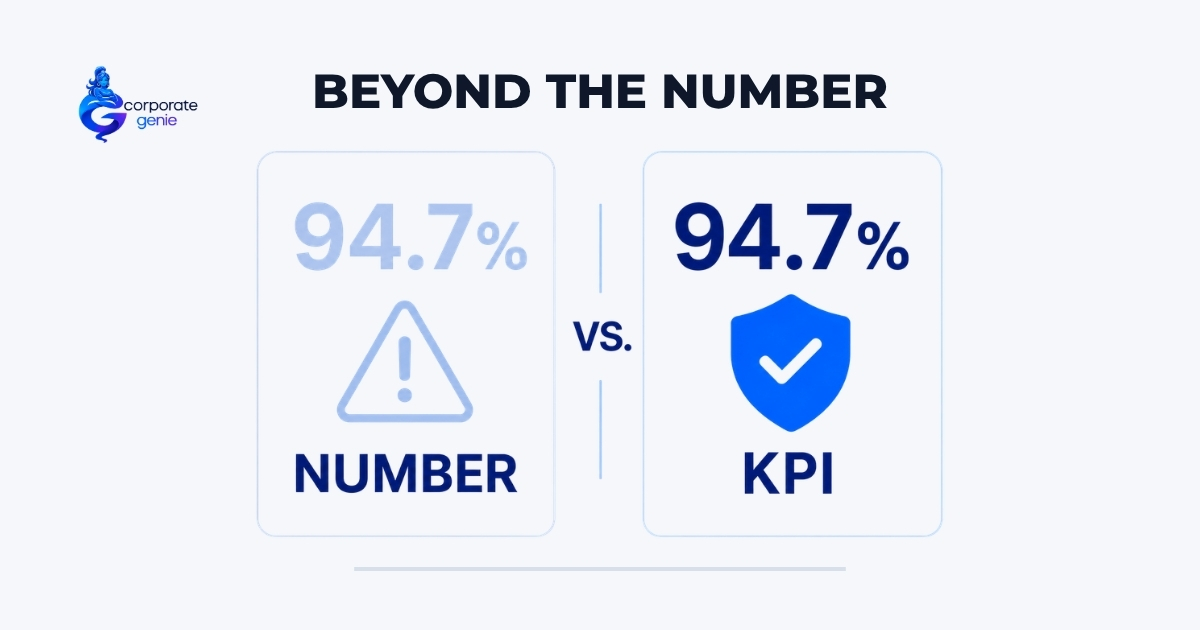
Are Your KPIs Ready for Corporate AI?
A KPI without its definition, owner, source, and freshness status is not a metric your AI can trust. Here is what makes a KPI decision-ready.
 Building Corporate AI
Who Should Own Corporate AI at Your Company
Every corporate AI build eventually runs into the same question: who owns this internally? Most companies are still several rounds in without a good answer. Here is what this role should decide, and why the two people who usually claim it are the wrong ones.
 Adoption & Results
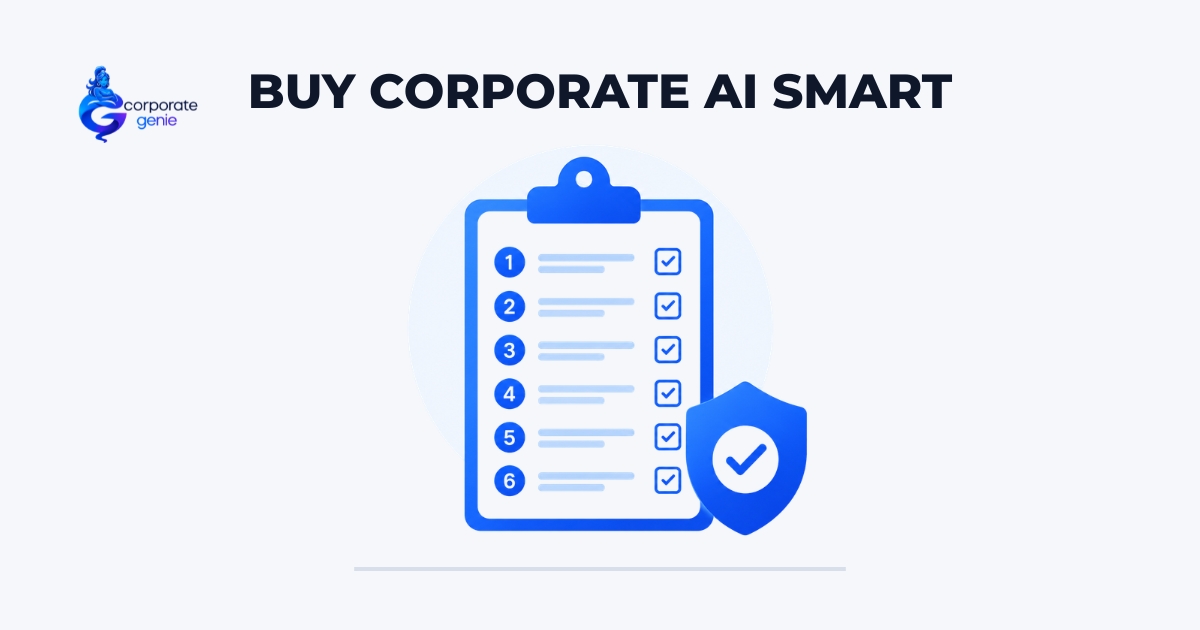
Six Questions to Ask Before You Buy Corporate AI
Most corporate AI evaluations focus on model quality and feature lists. The six questions that can predict whether a new system works in production are about governance, not engineering.
 Building Corporate AI
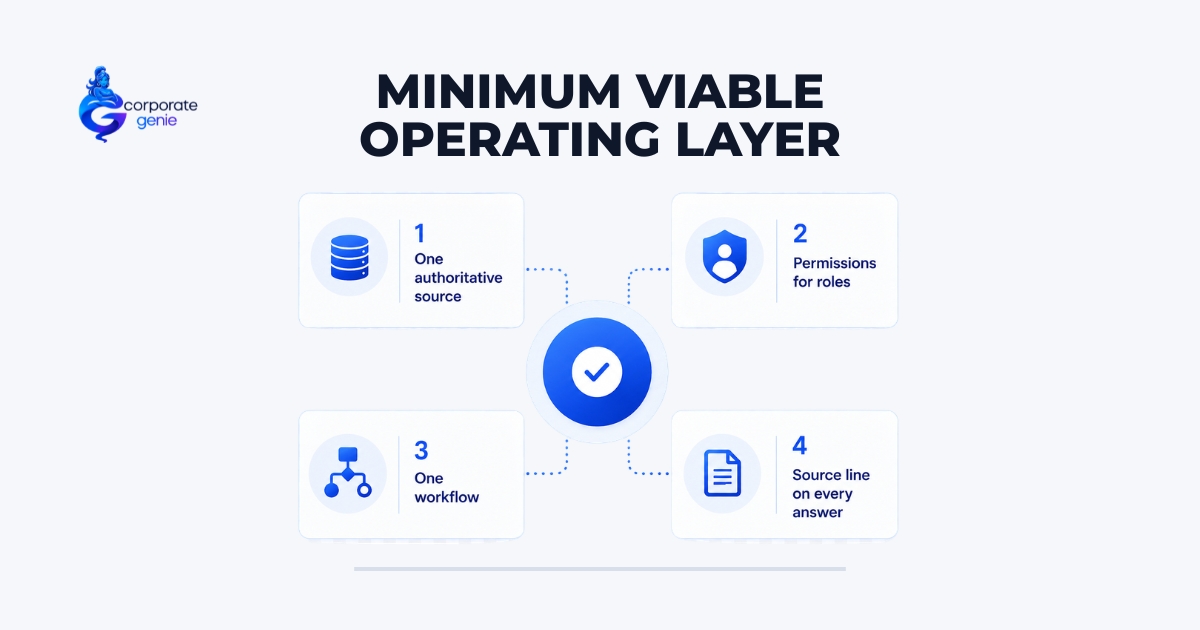
The Minimum Viable Operating Layer for Corporate AI
You do not need twelve components to build corporate AI that works. Here are the four parts of an operating layer, and the smallest version of each that still functions from week one.
 Building Corporate AI
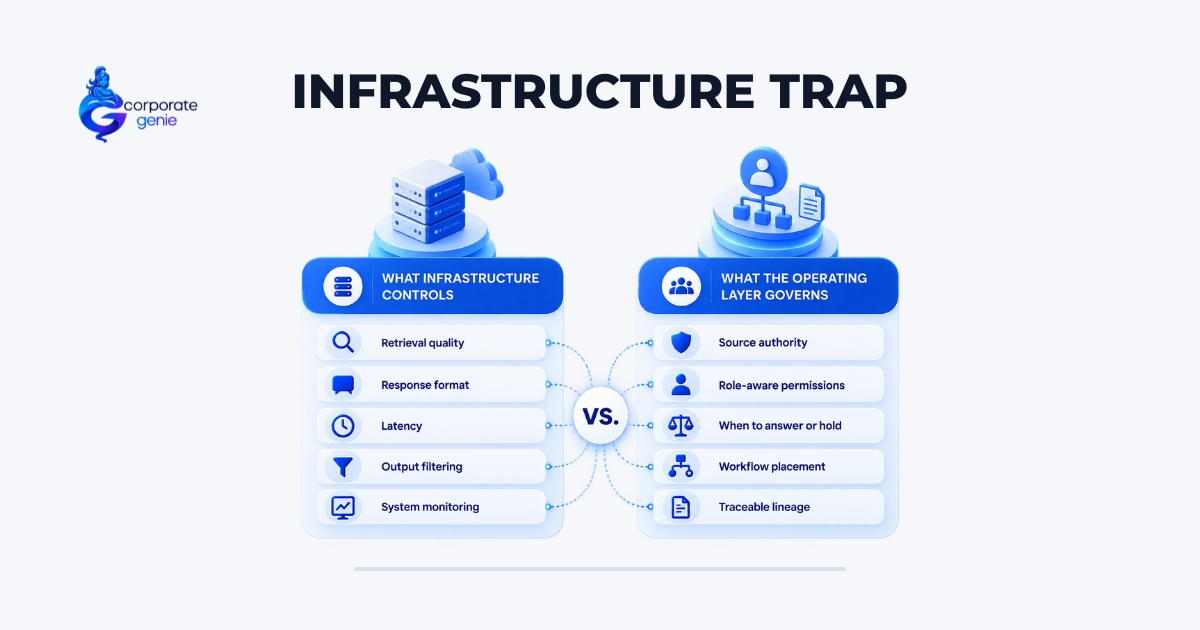
The Infrastructure Trap in Corporate AI
Adding more components to a corporate AI stack rarely produces more business value. The gap is governance: knowing which source to trust, who is allowed to see what, and when to hold an answer instead of giving a generic one.
 Building Corporate AI
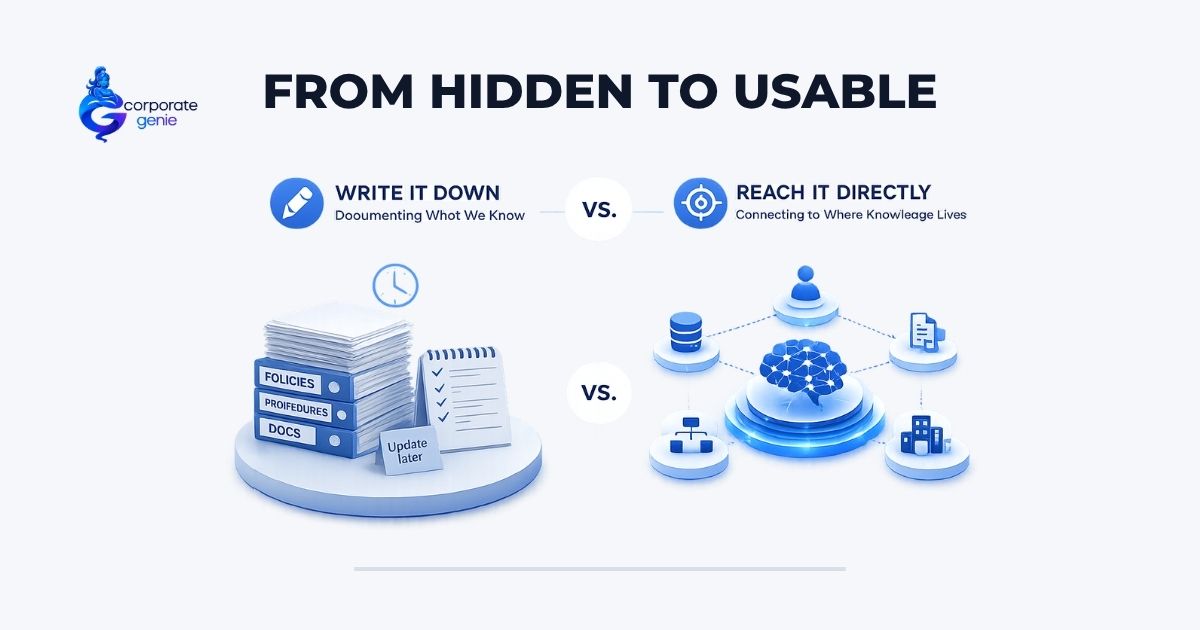
How to Access a Company's Hidden Knowledge With AI
Institutional knowledge loss costs U.S. companies an estimated $1.3 trillion a year. The solution is to reach knowledge where it already lives. Company-specific AI can do that without requiring perfect documentation first.
 Building Corporate AI
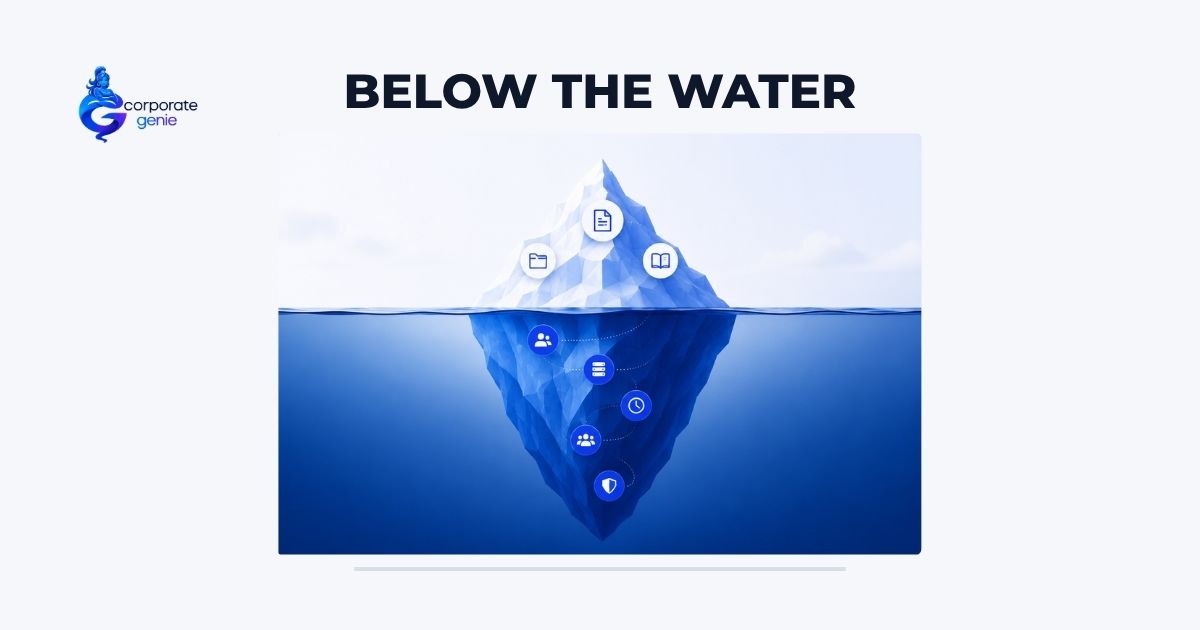
The Hidden Knowledge Underneath Every Business
Most AI tools only reach the small part of a company that's written down. Gartner estimates 70-80% of corporate knowledge is tacit, living in people, systems, and history rather than documents. That institutional knowledge is your most valuable and most underused asset.
 Adoption & Results
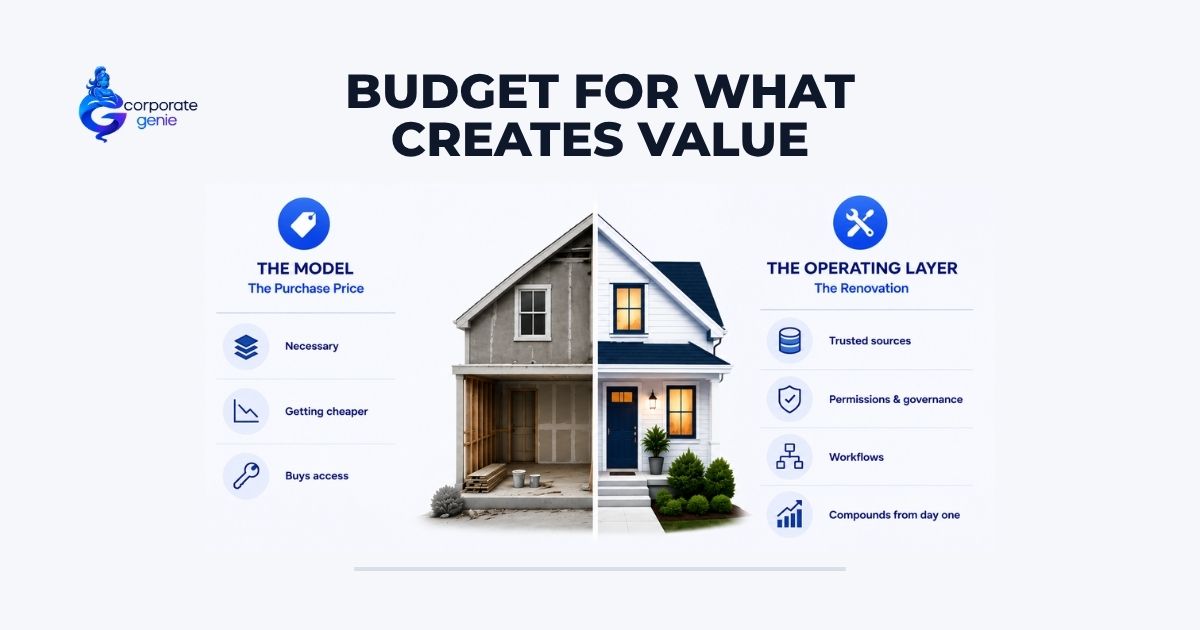
How Much? What Company-Specific AI Costs
Companies budget too much for the AI model and too little for what creates value. Here is how corporate AI budgets break down in 2026, and why the operating layer is the investment that compounds.
 Adoption & Results
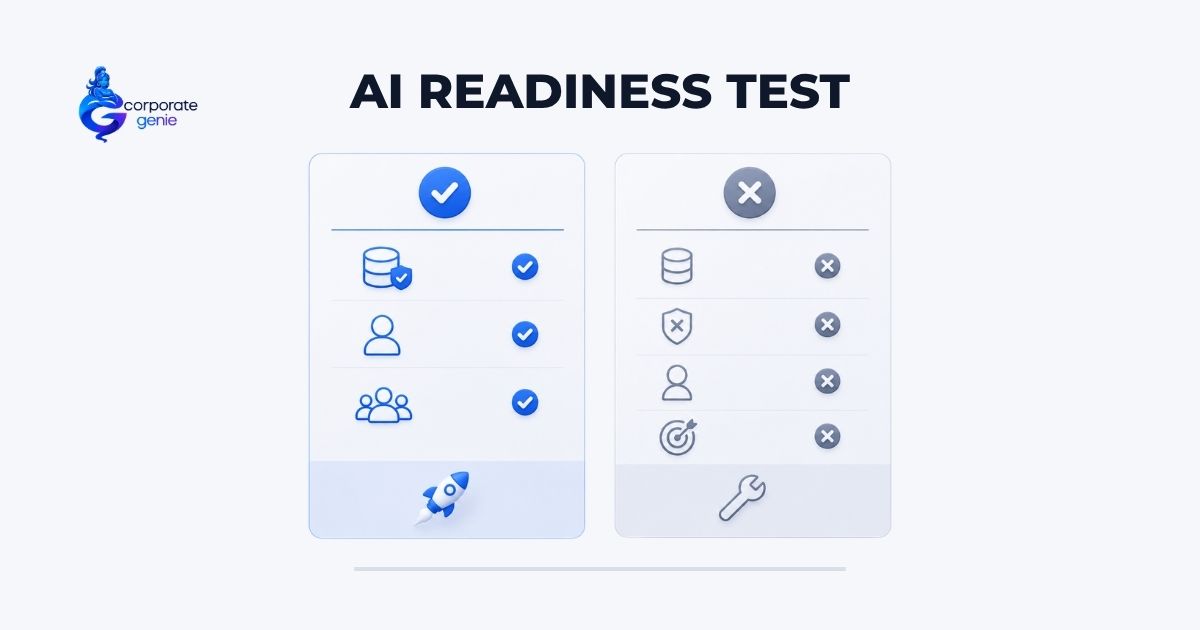
Your Company Is Probably More Ready for Corporate AI Than You Think
Only 7% of companies say their data is fully ready for AI. Full readiness was never the right prerequisite. Three conditions determine whether a company is ready to start building corporate AI, and most organizations already meet them in at least one area.
 Adoption & Results
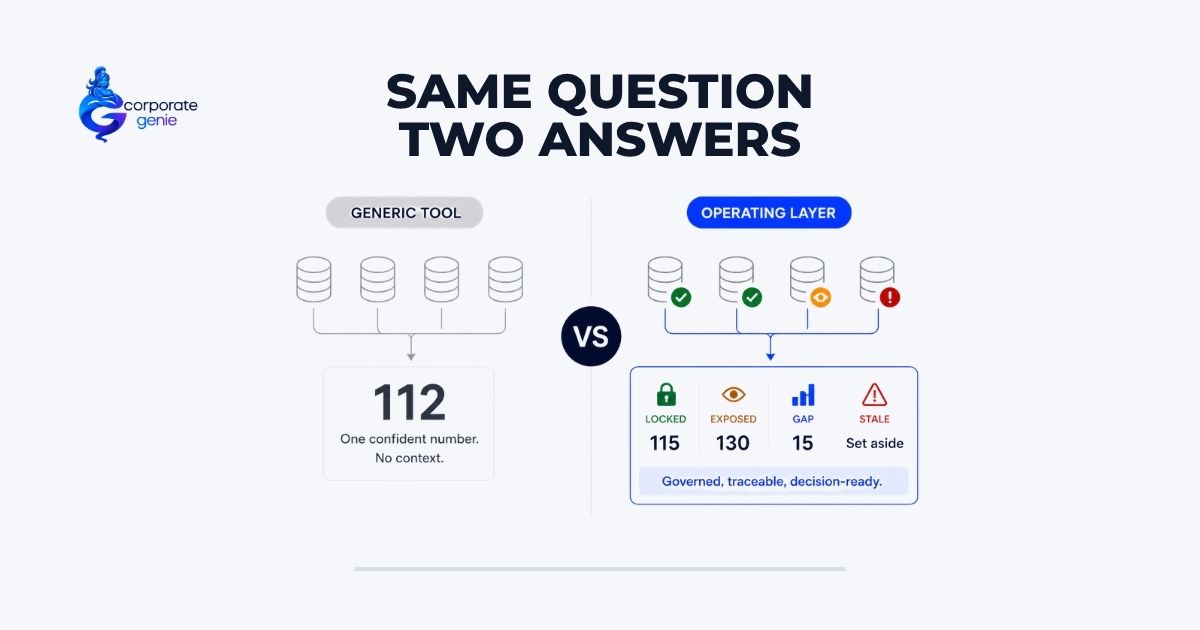
What Changes When Corporate AI is Working Inside Your Company
Generic AI gives everyone the same answer. Company-specific AI knows which sources to trust, when not to answer at all, and how to make every decision traceable. That difference is what corporate AI governance looks like in practice.
 Building Corporate AI
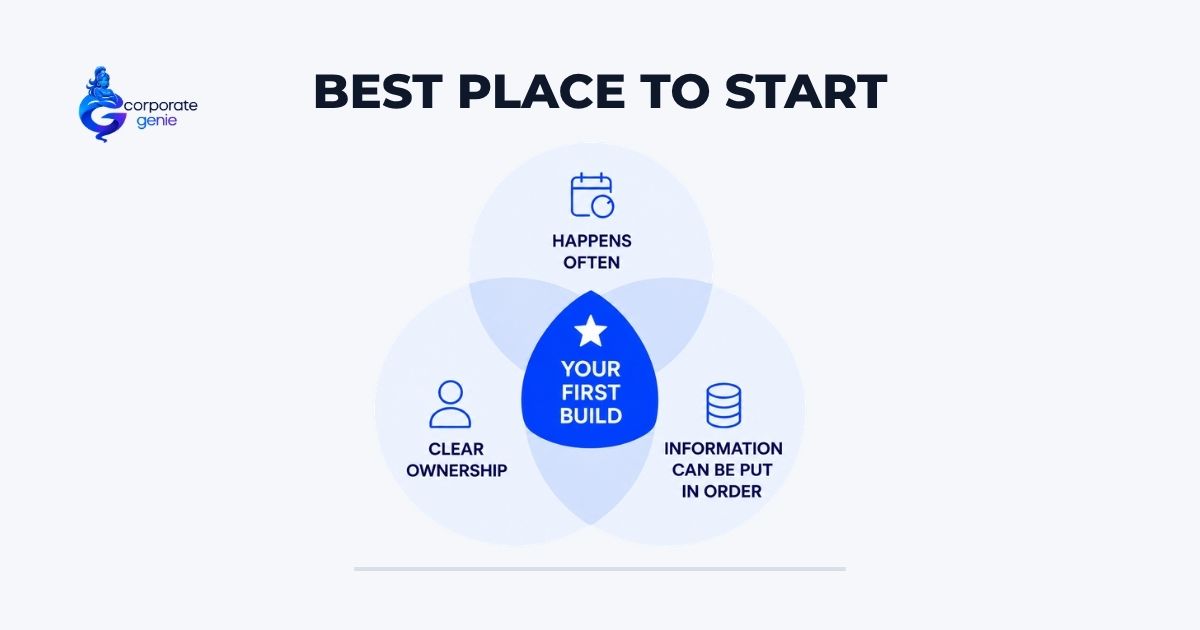
The Best Place to Start Building Corporate AI
88% of companies use AI, but fewer than 40% have scaled it beyond a pilot. The difference is where they started. Here's a practical framework for choosing the right first place to build company-specific AI.
 CorpGenie Framework
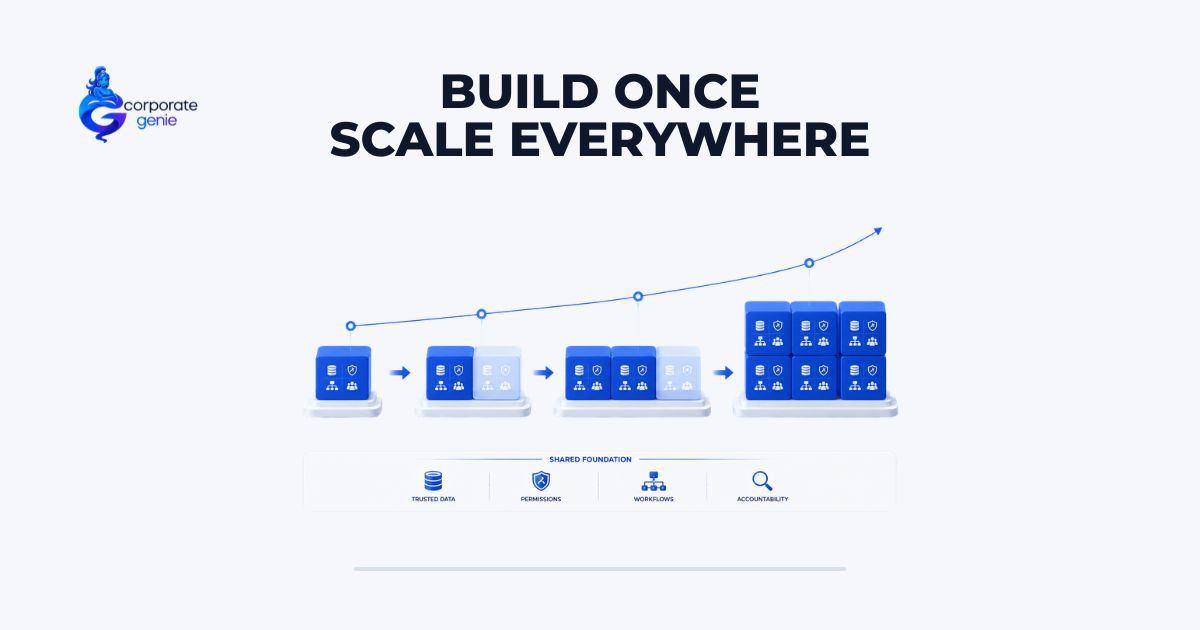
How to Start Building Corporate AI
Most AI pilots go nowhere. A 2026 survey found that nearly 70% of AI integrations fail because organizations can't escape the pilot stage. The fix is a first build designed to scale from day one.
 CorpGenie Framework
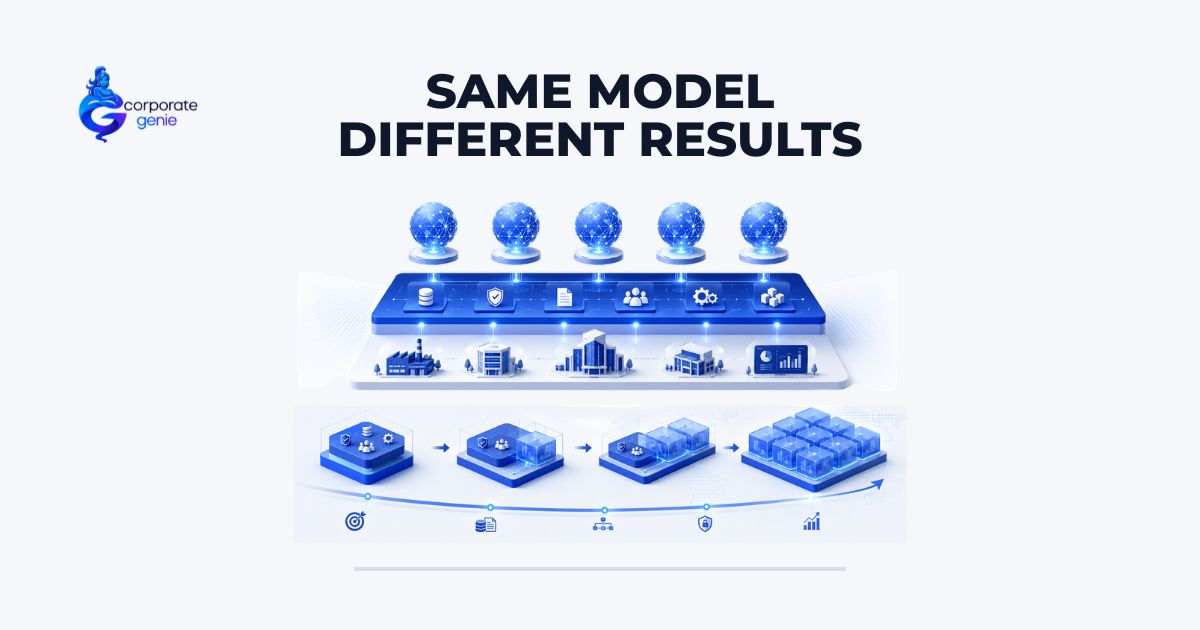
In Corporate AI, Context is the New King
Companies keep buying better AI models and getting the same disappointing results. There's a 37% gap between how well AI performs in a lab and how it performs in a real company, and no model upgrade can fix that on its own.
 Building Corporate AI
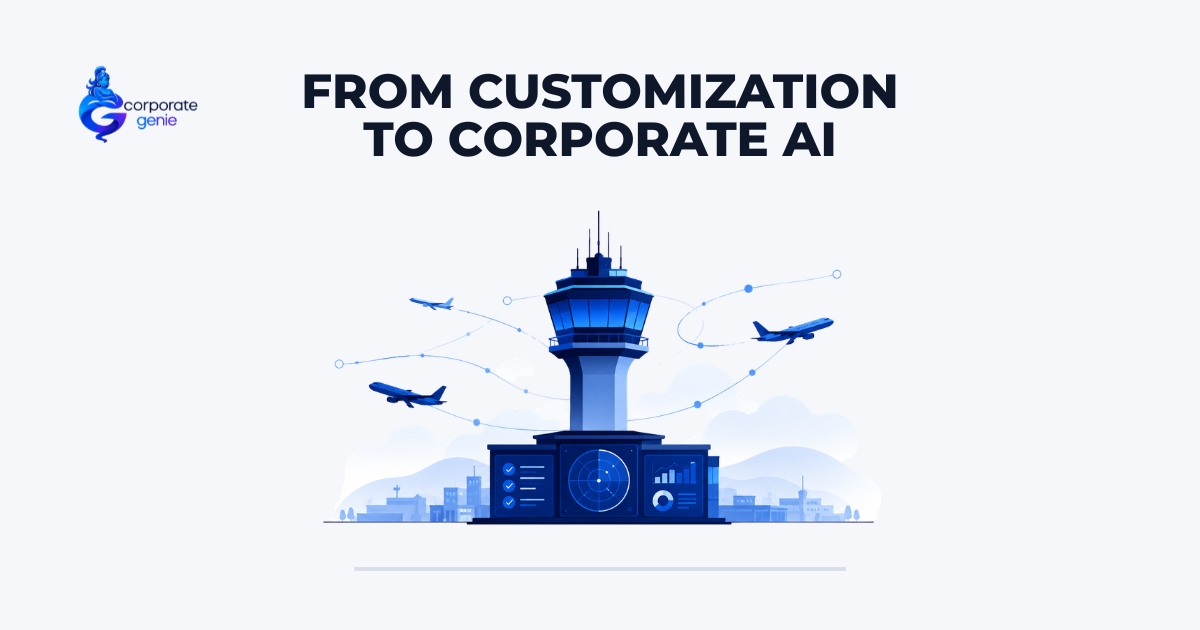
From Customization to Corporate AI: Where Real Work Begins
Prompt engineering, custom GPTs, fine-tuning, and document retrieval all change what AI says. None of them govern how it behaves. Building the corporate AI operating layer is where the real work and the real value begins.
 AI Reality
Companies That Get Real Value From AI Do One Thing Differently
88% of companies use AI. 60% see almost no value from it. The gap is the missing business context around the model. This is how leading companies are closing that gap with company-specific AI.